

Last Updated on 27 January 2026 by Massimo M.
Have you also been infected by the desire to create a collection of vinyl records? Don’t worry, you are not the only ones.
Vinyl records are a unique object that brings with it the charm of a bygone era when it was nice to physically own the copy of a particular artist’s record. If only because it had a stratospheric cover.Precisely for this reason many people have started to buy discs in this format preferring them to digital formats or compact discs. However, it is not easy to orient oneself in a world that for many, especially if young, appears rather alien.
So in this article I try to give you some tips that in my opinion are useful to create a collection of vinyl records without too many worries.
As it happens for any collection also for that of the records, whether they are 45, 33 or 78 rpm, there are some parameters to know for a correct evaluation of what you are going to buy and avoid, especially if we want to buy vintage copies, to remain victims of solemn “sun”. In the collection of vinyl records, rather specific terms are also used. It is not necessary to know them all but at least having a smattering helps. For this purpose I have created a special section of the site with a glossary of the most used terms. It is also interesting to have a minimum of knowledge about the main types of vinyl records that we can encounter while building our collection of vinyl records.
First of all it is good to know that the discs, as well as for the format, can be divided into different categories depending on the type of use and commercial destination.
So the LPs (long playing) are the classic 33 rpm that can be single, double, triple or even quadruple. Then there 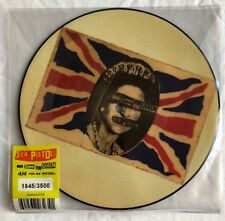 are the Ep (Extended plays) usually in 7″ or 12″ format with a few songs per side, sometimes only one. As for the 45 rpm, in addition to the standard editions for resale, with cardboard cover sometimes even opening, there are picture disc editions and those printed on colored vinyl. Also quite common are versions for juke boxes, which have practically disappeared as new prints, with the 90s.
These 45 rpm usually have an anonymous cover or with, at most, the logo of the record company. Another typical feature of these editions is that on the two sides there are songs not belonging to the repertoire of the same artist, indeed often there are couplings to say the least bizarre.
On the market you can find, although rather rarely, the so-called Pressing tests. As the name implies, these are real print tests necessary to test the quality of the master and the molds of the album before starting the massive production of the disc. Pressing tests are obviously very rare and extremely coveted by collectors. Equally coveted by collectors are the acetates that are the real originals from which the mold for the production of the discs is obtained. Needless to say, acetate is something rarely marketed in a standard way. Most often it can be found as an object of an auction. Sooner or later you will want to buy used vinyls. You will want to do it because you will not find a reprint of a specific title that you like so much or because you will give in to the temptation to have in your hands an object produced thirty or forty years ago.
At this point we have to understand how to evaluate the two main components of our album namely the actual vinyl and the cover.
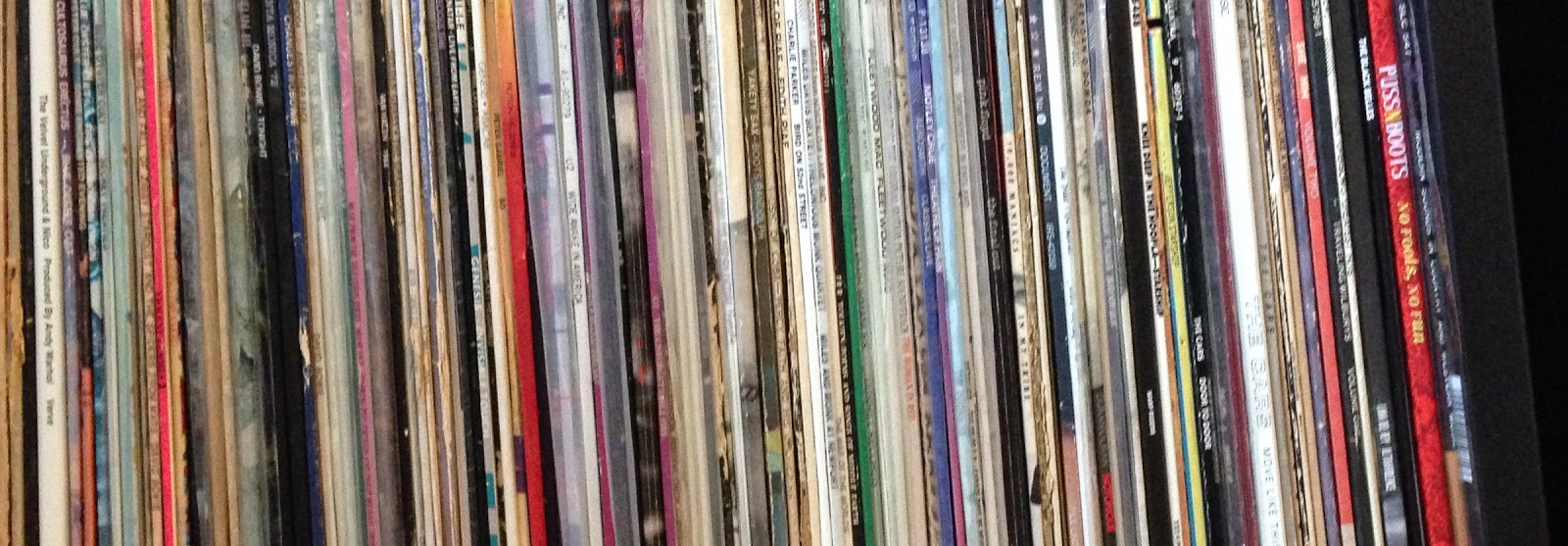 Vinyl – The first and most important evaluation to be made on the state of vinyl is the one that is done by eye.
So, first of all, you need to be very careful to spot any scratches on the surface.
Most authentically vintage vinyls will definitely have some superficial marks, but pay special attention to deeper scratches because they are the ones that will add annoying real noise.
You should know that for the evaluation of the physical quality of the used disc the sellers, professional or amateur, adopt a fundamentally visual evaluation system that still provides a fairly precise idea of what you are going to buy.
This classification, adopted all over the world, is especially useful when buying online because, in this case, it completely lacks the possibility of making the evaluation “on sight”.
Taking for granted the honesty of those who sell, the international scale of values, the Goldmine grading standards reported in a previous article, is still an indispensable tool to avoid receiving unwelcome surprises.
The ratings are these: Evaluation of the actual Disc
M = Mint Disc never heard. This is not debatable, it must be a fact. If the disc is sealed it is a Mint. Already the fact that the disk is no longer sealed prevents it from being Mint.
EX = Excellent Disc listened to a few times.
VG = Very good Disc listened to several times, good sound quality
G = Good Disco much listened to, discrete sound quality
F = Fair Disc listened a lot
P = Poor Disc treated without care. Insufficient sound quality, “jumps” in listening.
B = Bad Disk in very bad condition.
BB = Broken Broken disc or even just chipped
Cover M = Mint Cover never opened, with cellophane or original envelope. The same considerations apply as for the Mint disc.
EX = Excellent Almost new cover.
VG = Very good Cover and any good inserts. Watch out for the cuts that the vinyl itself sometimes gives to the envelope even after two or three times it is stored.
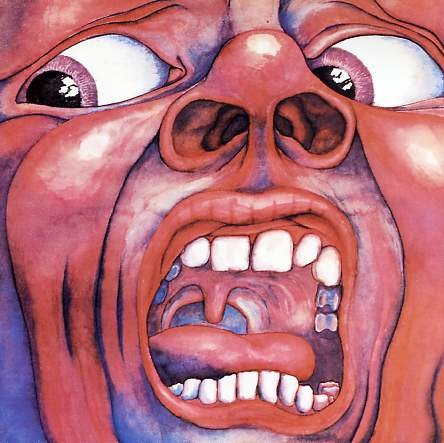
G = Good Cover and any inserts not perfect.
I recommend always reading up before a purchase because often the inserts reproduce photos, lyrics of the songs or translations of the same (see for example the Genesis records, they are very interesting and, if missing, greatly decrease the evaluation of the disc).
F = Fair Cover and any inserts with significant signs of wear, such as folds and tears. Usually these are the records that are found in flea markets.
P = Poor Cover, label and any seriously damaged or incomplete inserts.
NO = None No cover or non-original cover
Attention should also be paid to dirty vinyls. They can be found, especially at fairs or by junk dealers, at particularly low prices. Unless I own a good machine for washing discs, I would not buy dirty or visibly badly reduced discs and in any case I would only consider real occasions that, incidentally, are usually quite rare. Maybe these discs, despite being dirty, do not have significant scratches on the surface but the dirt that has settled on the surface, which is not always possible to 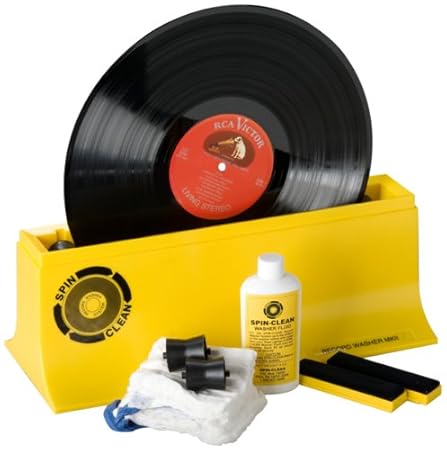 remove completely, will still add a very annoying amount of noise.
Buying in a traditional store you will hardly have this problem but it is often possible to ask to listen to the record before buying it, this certainly avoids bad surprises. Where possible, it is advisable to take advantage of this possibility as much as possible.
Cover – There are many damages to the cover that can decrease, even by a lot, the value of a disc. The first thing to evaluate is the wear circle that in some cases, comes to make the entire profile of the disc visible. The more visible it is, the worse it is, of course. The same applies to the outer edges of the cover which are often rather badly reduced. Both of these defects greatly lower the rating of a disc.
The presence of mold indicates the permanence of the album in an attic or cellar and most likely substantial damage to the quality of the vinyl. In this case, unless you are faced with particularly rare discs, it is advisable to desist from buying.
Neckline of the flaps of the cover,water damage and, in general, signs, trademarks, labels or the signature of the original owner of the album are also a reason for devaluation of an album.
Cover pierced or cut. A hole or a regular cut in the cover indicates that the record was withdrawn from the market and then reintroduced there at a later date. It is not always said that this decreases the value of the copy, it depends a lot on the cut / hole that has been made.
Price – Determining what is the correct amount to pay to buy a certain album could be a problem for the beginner collector because, as we have already seen, there are numerous variables that contribute to the formation of the final price even if, as for all collections, the price depends on the rarity and demand on the market of a given piece. For a preliminary evaluation, websites such as Discogs.com or Popsike.com are very useful. Both of these sites must be a little known in order to make the best use of the information contained in them. Especially Discogs, which is increasingly becoming a reference point for the used disc market, can mislead the less experienced user. My advice is to “lose” some time in order to become practical of the mechanisms that govern it, especially those related to valuations for the purpose of selling or buying. Disc Printing – Probably the hardest thing to determine, even for experienced collectors, is when a print is an original First Print.
Also in this case there are countless variations to take into account. For example, if the album was printed in the 60s the thickness of the vinyl will be quite consistent, the label will have a rather dated appearance and, probably, will also have a postal address.
If the disc is American it will have a rather thick cardboard cover while if it is European the cover will be quite thin and probably with a glossy print.
For each decade there are different and peculiar characteristics that make it a little easier to recognize the original vinyls.
Another way to determine if you have a first copy in your hands is to use the matrix number that is in the area immediately preceding the label, the so-called run off area, with which you can go back to the print version, but it is a matter for real experts.
The first prints have a higher rating than the reissues for various reasons, including the fact that they sound better, the quality of the vinyl better, different details in the artwork that will then be changed in subsequent prints.
The album Led Zeppelin IV, which is discussed in this article, is one of the many examples of variation of the label between one print and the next.
Material – Most vinyl records are black but many labels print, often in limited editions, copies of records in various colors and also on transparent vinyl. There is virtually no difference in sound between a black vinyl and a colored one. Finally, there are the picture discs that have an image on both sides. These editions are sold with a transparent cover  and are often quite rare prints. The mass of vinyl plays an important part in the audio quality of the vinyl itself.
Usually standard LPs weigh 120 gr but there are editions for audiophiles that weigh up to 200 gr. Lately many reissues of great hits of the 60s / 70s are made on 180 gr vinyl.
I hope these tips are useful to you to create a collection of vinyl records and if you have something to ask or any suggestions to leave, you are welcome ! Good vinyl to all!
As an Amazon Associate, I earn from qualifying purchases.


Leave a Reply